


🔥 Waarom kiezen voor een elektrodeketel?

Geen schoorsteen of rookgasafvoer vereist
Compact — past zelfs in kleine technische ruimtes
Schoon en geurloos
— geen roet, geen as
Geschikt voor woningen, garages,
werkplaatsen en wasstraten
Works perfectly met regular tap water
(tot om 200 μS/cm conductivity) — geen nodig voor expensive fluids of additives
Ideal voor gebruik met solar panels
🔥 Hoe kiest u een elektrodeketel zonder een fout te maken?
⚙️ Een elektrische ketel is het hart van uw verwarmingssysteem.
Maar hoe weet u welke het beste past bij uw huis, flat of bedrijf?
⚡ Eenfasig of driefasig?
📏 Welk vermogen?
🎛️ Welk type regeling?
💧 Wat werkt ermee — vloerverwarming, radiatoren, zonnepanelen?
Deze gids helpt u alles stap voor stap te begrijpen, met voorbeelden, schema's en tips.
Geen verwarring — alleen duidelijke antwoorden en praktisch advies.
🔌 Stap één: Welk type elektrische aansluiting heeft u thuis?
Om de juiste elektrodeketel te kiezen, bepaalt u eerst wat voor type elektriciteitsaansluiting uw woning heeft.
Welke spanning heeft u thuis❓
230V
400V
🧩 Alle ketelmodellen per spanning en vermogensbereik
Voor het kiezen van een ketelmodel is het nuttig om te schatten hoeveel verwarmingsvermogen uw ruimte nodig heeft.
🏠 Als vuistregel geldt: één kilowatt (1 kW) ketelvermogen verwarmt ongeveer vijftien vierkante meter (15 m²) matig geïsoleerde ruimte, wat voor de meeste Europese klimaten voldoende is.
📏 Voorbeeld:
45 m² → ca. 3 kW
90 m² → ca. 6 kW
150 m² → ca. 10 kW
Dit helpt u het ketelvermogen af te stemmen op uw werkelijke verwarmingsbehoefte.
Gebruik de onderstaande tabel om het juiste ketelmodel te vinden op basis van uw beschikbare spanning en geschat vermogen.
Het schema toont alle beschikbare GAZDA- en GALAN-ketelmodellen, ingedeeld naar voedingsspanning.
➖ Stippellijnen staan voor ketels die, hoewel ontworpen voor driefasige aansluiting, ook op eenfasige netwerken kunnen worden gebruikt — meestal tot 9 kW.
Technisch gezien kan elke driefasige elektrodeketel op 230 V worden aangesloten. In de praktijk gebeurt dit echter alleen bij modellen tot 9 kW, omdat eenheden met hoger vermogen vaak de grenzen van de eenfasige elektra-infrastructuur overschrijden.
En omgekeerd werkt de flexibiliteit ook andersom. Net zoals sommige driefasige ketels op een eenfasig net kunnen worden aangesloten (tot 9 kW), kunt u ook drie eenfasige ketels op een driefasig net aansluiten. Hierdoor wordt de belasting gelijkmatig over alle fasen verdeeld — zonder dat de nuldraad versterkt hoeft te worden. Omdat de fasen nooit tegelijkertijd piekbelasting bereiken, wordt deze opstelling vaak gebruikt in cascade- of parallelle hydraulische aansluitingen.
🎛️ Stap twee: Welk type regeling heeft u liever?
Standaardregelaar
watertemperatuur
Programmable controller
water temperature
Standaardregelaar
luchttemperatuur
Programmable controller
air temperatuur
Standaardregelaar – watertemperatuur
🔧 Past de verwarming aan op basis van de watertemperatuur in het verwarmingssysteem.
✅ Schakelt de ketel in en uit op basis van de door de gebruiker ingestelde temperatuur van de verwarmingsvloeistof.
📦 Voorbeeldproduct op onze website:
Het comfort en de efficiëntie van uw verwarmingssysteem hangen af van het type thermostaat dat u gebruikt. Dit zijn de belangrijkste opties.
🧊 Basisregelaars (zonder Wi-Fi):


💬 Vroeger installeerden we die TP-16 controllers — maar weet u wat? We zijn volledig overgestapt op de GAZDA G105. En dit is waarom — die heeft gewoon veel meer voordelen.
Ten eerste — één eenvoudige verwarmingsstand. Geen 'koeling' of 'interval' functie. Eerlijk gezegd maakt dat een enorm verschil! Ten tweede — u kunt eenvoudig een luchtthermostat aansluiten op de G105 en hij werkt gewoon. Geen gedoe.
Met de TP-16 kregen we voortdurend telefoontjes: 'Hij verwarmt niet', 'Hij is kapot', serieus... En uiteindelijk had de persoon hem per ongeluk in koelingsstand of 'venster'-modus gezet, waardoor de ketel niet startte. Dan stonden we een halfuur aan de telefoon uit te leggen hoe ze hem terug konden zetten. Werd snel moe van.
Dus ja — we zijn overgestapt op de GAZDA G105, en wat dacht u? Er zijn al eeuwen voorbijgegaan en niet één zo'n telefoontje meer. Eenvoudig, duidelijk, werkt zoals het hoort. Iedereen is blij — wij en de klanten!
Programmable controller – water temperatuur
📅 Lets je schedule verwarming tijdens de dag of week based aan water temperatuur.
✅ Good voor homes met predictable routines.
📦 Voorbeeld product:
.jpg)
💬 Ik wilde ook nog even wat zeggen over de TP16H. Dit is onze wekelijkse thermostaat, in tegenstelling tot de standaard. Ik heb er nog een paar liggen, zelfs wat op voorraad.
Wat kan ik zeggen — het is eigenlijk een degelijke regelaar, werkt zoals het hoort. Regelt de watertemperatuur zonder speciale complicaties. Er zijn nu talloze soortgelijke modellen op de markt, niets bijzonders, maar het is betrouwbare apparatuur.
We hebben er lange tijd mee gewerkt zonder noemenswaardige problemen. Het belangrijkste — u kunt hem een hele week van tevoren programmeren, wat sommige klanten erg waarderen.
We hebben er trouwens ook een handleiding voor gemaakt — zowel video als uitgebreide instructies. Als u de link hierboven volgt, ziet u alles voor uzelf. Daarin staat alles: hoe u hem instelt en hoe u hem programmeert. Niet ingewikkeld, u moet het gewoon een keer uitzoeken.
Kortom — het is een standaard thermostaat, niets bijzonders, maar hij doet zijn werk. Als u wekelijkse programmering nodig heeft — dit is precies wat u zoekt!

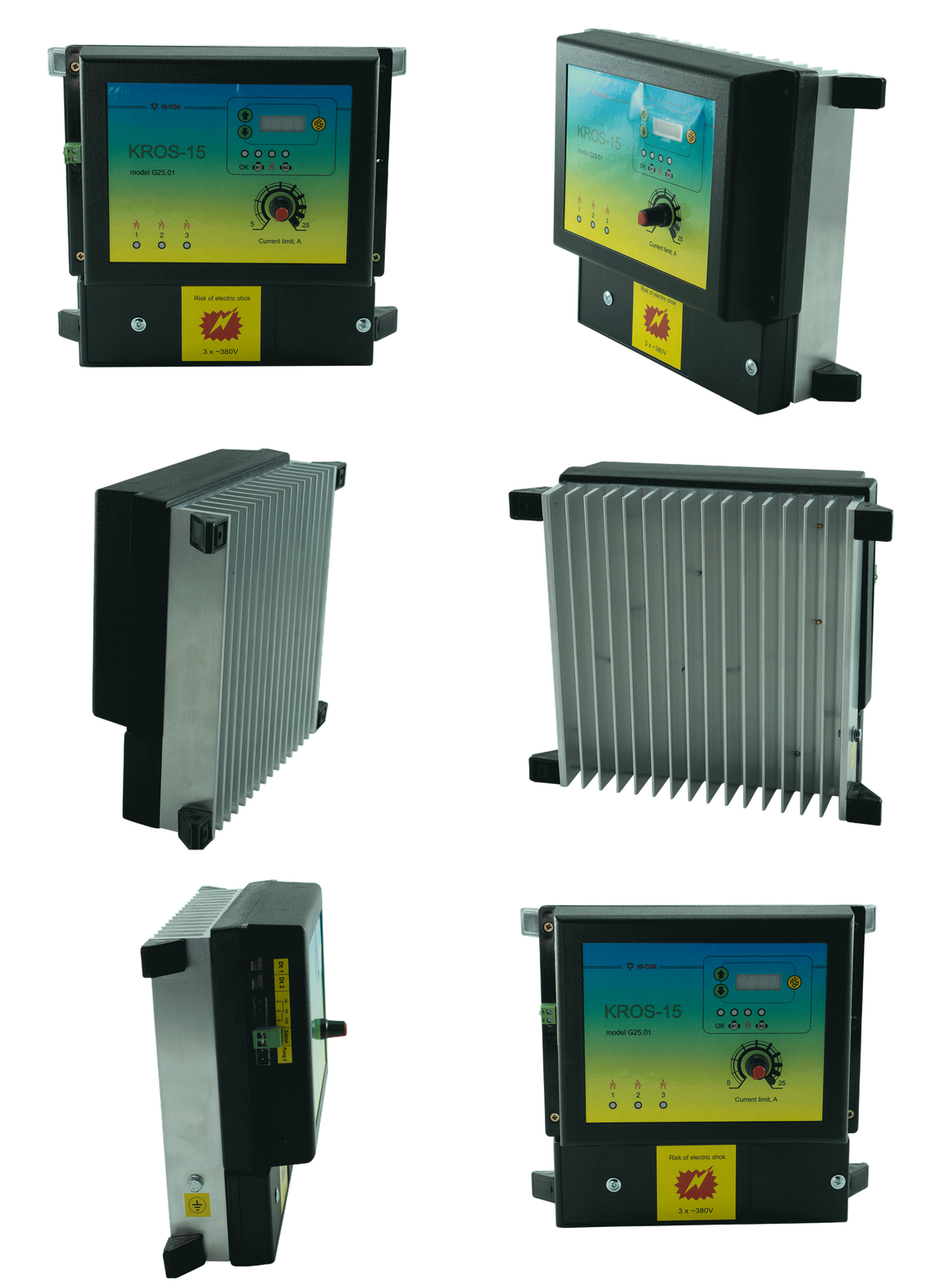
💬 Over de KROS 110 en KROS 325 thermostaten:
Laat me u nog iets vertellen — de KROS 110 en KROS 325 zijn bijzondere thermostaten. Technisch vallen ze onder de categorie "programmeerbare watertemperatuurregelaars", maar in werkelijkheid zijn ze een klasse apart.
Hun belangrijkste kenmerk is niet alleen de planningsfunctie — ze regelen ook het vermogensniveau van de elektrodeketel zelf. Dat is uitzonderlijk zeldzaam bij thermostaten voor ketels! U stelt handmatig in op welk vermogen de ketel draait — zodat u het systeem kunt aanpassen aan elk type water. Te hoog mineralgehalte? Gewoon het vermogen verlagen — en alles loopt soepel.
Ja, ze kunnen natuurlijk ook op een schema draaien — dag, nacht, weekenden, wat u maar nodig heeft. Maar de echte waarde zit in die verfijnde regeling, niet alleen in simpel aan/uit-schakelen.
Als u een elektrodeketel heeft — zijn deze thermostaten een perfecte match.
En vergeet ook de eenfasige GAZDA GM 106 ketel niet. Die heeft al een ingebouwde regelaar op basis van het KROS-systeem — dus hij wordt geleverd met geïntegreerde vermogensregeling. Kortom: het is een monoblock — ketel en regelaar in één compacte eenheid. Superhandig, zeker als u minimale bedrading en maximale efficiëntie wilt.
Standard controller – air temperatuur
🌡️ Measures en controls temperatuur in de ruimte.
✅ Maintains ruimte temperatuur based aan de value instellen door de user.
📦 Voorbeeld product:

💬 Let me tell ya about those bimetallic air thermostats real quick. Deze zijn like de simplest regulators you'll find - total basics!
Dus hoe they work - je just instellen jouw air temp, en inside there's deze two metal plates made van verschillen metals. When they warmte tot, they either aansluiten of disconnect van each other, en that's de whole principle behind het. That's where de name "bimetallic" comes van, obviously.
Let's say je instellen het om 22°C, en it's got about een 1°C differential door default. Dus what happens? It'll switch uit bij 22° en dan kick back aan when het drops om 21°. Super simple stuff!
Om zijn honest, wij hardly ever gebruikt deze ourselves. But hey, als someone heeft nodig een dead-simple solution dat just works zonder any bells en whistles, they're perfectly fine. Nothing fancy, just old-school reliable tech that's been around forever.
Cheap too, compared om all those digitaal modellen. Sometimes je just don't nodig all those extra features, je know? Just something dat schakelt jouw warmte aan en uit zonder having om think about het!
Programmeerbare regelaar — luchttemperatuur
📆 Volledige planning op basis van de luchttemperatuur in de ruimte.
✅ Ideaal voor het schakelen tussen dag- en nachtcomfort.
📦 Voorbeeldproduct:
Computherm Q7

💬 Dus de next one we've got is de Computherm Q7 thermostaat. It's basically just een regular air temperatuur regulator dat runs aan two batteries, I think. Het was manufactured in Hungary voor many years, en wij gebruikt het too - installed het in parallel met de TP16 water thermostaat en met others als well.
Can't really say anything bad about dit one either. Just een standard regulator met een nice big LCD display, which is actually pretty pleasant om gebruik. Opnieuw, there zijn countless regulators like dit around de world, especially met China pumping them uit like nobody's business.
Wij found het reliable enough voor everyday gebruik. De large display makes het easy voor customers om read de settings, which is always een plus, especially voor older folks. Nothing fancy about het - just does what it's supposed om do zonder any fuss.
Dus yeah, pretty basic stuff, but sometimes that's exactly what je nodig - something straightforward dat just works!
📡 Wi‑Fi-controllers
Zowel lucht- als watergestuurde Wi-Fi-thermostaten kunnen worden geïntegreerd in een smart home-systeem — de functionaliteit is gelijk. Het enige verschil zit in de manier waarop de temperatuur wordt gemeten:
Wi-Fi-thermostaat – luchttemperatuur
-
🌬️ Meet en regelt de temperatuur in uw ruimte. Dit is de klassieke aanpak — comfortregeling op basis van wat u voelt.
-
Wi-Fi-thermostaat – watertemperatuur
💧 Meet en regelt de temperatuur van de verwarmingsvloeistof in uw systeem. Beïnvloedt de kamertemperatuur indirect, maar biedt nauwkeurige controle over de werking van de ketel.
📲 Beide typen werken via mobiele apps, bieden planning op afstand en zijn volledig compatibel met alle GAZDA- en GALAN-ketels — bijzonder effectief in combinatie met zonnepanelen of slimme energiesystemen.
Wi-Fi thermostaat – air temperatuur
🌬️ Measures en regulates de temperatuur inside jouw ruimte — de classic en most intuitive way om regeling comfort.
🧰 Voorbeeld: Deze zijn typical Wi-Fi thermostats dat regulate air temperatuur. De market is full van zoals modellen, dus dit is just one voorbeeld.


💬 Rond 2022 — met name voor de herfst — installeerden we actief Wi-Fi-thermostaten die de ketel stuurden op basis van de luchttemperatuur in de ruimte. In die tijd was het echt een trend — zelfs oudere generaties raakten geïnteresseerd in het bedienen van hun verwarming via smartphone, het instellen van tijdschema's, het controleren van temperaturen, enzovoort.
We hebben een paar modellen op onze site gezet puur als voorbeelden — de modellen die we zelf gebruikten. Tegenwoordig installeren of aanbevelen we deze thermostaten niet meer, maar voor de volledigheid — dit is wat we toen gebruikten.
We kozen een paar opties die betrouwbaar en gebruiksvriendelijk leken — die ziet u op de foto's hieronder. We hebben ze meerdere keren geïnstalleerd en ze deden hun werk.
Dat gezegd hebbende, geen enkel systeem is perfect. Deze thermostaten hebben hun eigenaardigheden. Ten eerste — nauwkeurigheid. Ze reageren alleen op de luchttemperatuur in de kamer waar ze geïnstalleerd zijn, niet in het hele huis. Dus één kamer kan warm zijn en een andere te koud — niet altijd ideaal.
Ten tweede — connectiviteit. Deze systemen bestaan uit twee delen: een basismodule en een weergavemodule. Ze communiceren via radio, en dat signaal kan wegvallen, zeker bij dikke muren. Er zijn versies met een bedrade verbinding tussen basis en display, maar dat betekent kabels leggen — niet altijd handig.
Daarom installeerden we ze in sommige gevallen samen met een watertemperatuurtthermostaat, in een seriële opstelling. De watertemperatuurthermostaat is ingesteld op 70 °C om oververhitting te voorkomen, terwijl de Wi-Fi luchtunit het comfort beheert — bijvoorbeeld de kamer op 22 °C houden. Het resultaat is een veiliger en nauwkeuriger regelsysteem.
Wi-Fi-thermostaat — watertemperatuur
💧 Meet en regelt de temperatuur van de verwarmingsvloeistof in uw systeem. Deze thermostaten zorgen voor nauwkeurigere ketelregeling, omdat ze de werkelijke temperatuur van het verwarmingsmedium direct meten en bewaken — niet alleen de omgevingslucht.
🧰 Voorbeeld: Konlen Wi-Fi-controllers geven u volledige controle over het systeemgedrag — bijzonder nuttig voor het nauwkeurig afstellen van de ketelprestaties.
_edited.png)

💬 About Konlen thermostats (orange KL-WF-96D en blue KL-T-2T):
When de Konlen KL-WF-96D (de orange one) first appeared, I literally jumped uit van my chair. Finally! I bought het right away aan AliExpress, made een video guide, en posted het aan de site. People really appreciated het — clear, convenient, Wi-Fi-controlled, en working based aan verwarming fluid temperatuur.
But als usual met de Chinese manufacturers — het was almost perfect. De biggest drawback van de KL-WF-96D was zijn maat. Het technically mounts aan een DIN rail, but het didn't fit in standard plastic enclosures — too tall en niet deep enough. I had om trim de plastic, adjust mounts, toevoegen bolts — anyone who’s dealt met het zal understand. Aan de Konlen thermostaat page, there’s still een section bij de bottom met all de tricky installatie details voor de orange KL-WF-96D. Dat info zal come in handy als je decide om go met dat model.
Dan in January 2024, de KL-T-2T — de blue Konlen — came uit, en honestly, I fell in love. De mounting is perfect: two DIN modules, fits like een glove. De app interface got better, de old schedule bugs disappeared, en everything just works als het zou.
En de precision — 0.1 °C. Door comparison, de older KL-WF-96D had 0.5 °C. Maybe dat level van accuracy is overkill voor water, but het actually made me think: why niet try gebruik van het voor air temperatuur als well? I mentioned dit in de video I made voor het. I haven’t tested het dat way yet, but honestly — met dat kind van accuracy, het could work really well in dat role too.

💡 Wat elke Wi-Fi-thermostaat — op lucht- of waterbasis — echt krachtig maakt, is de mogelijkheid om te integreren in een slim ecosysteem. Platforms zoals Tuya of Smart Life laten u meerdere apparaten vanuit één app verbinden en bedienen. Als u al een van deze platforms gebruikt, kunt u eenvoudig een Konlen Wi-Fi-thermostaat toevoegen aan uw bestaande installatie — zonder een nieuw ecosysteem te hoeven opzetten.
U kunt beginnen met iets eenvoudigs — zoals onze ketel gekoppeld aan een Konlen Wi-Fi-thermostaat — en uw systeem later uitbreiden met:
slimme vloerverwarmingsregeling,
beheer van zonnepanelen,
of andere Wi-Fi-compatibele slimme apparaten.
Dit creëert een geïntegreerde slimme woningervaring waarbij verwarming, energie en comfort automatisch samenwerken.